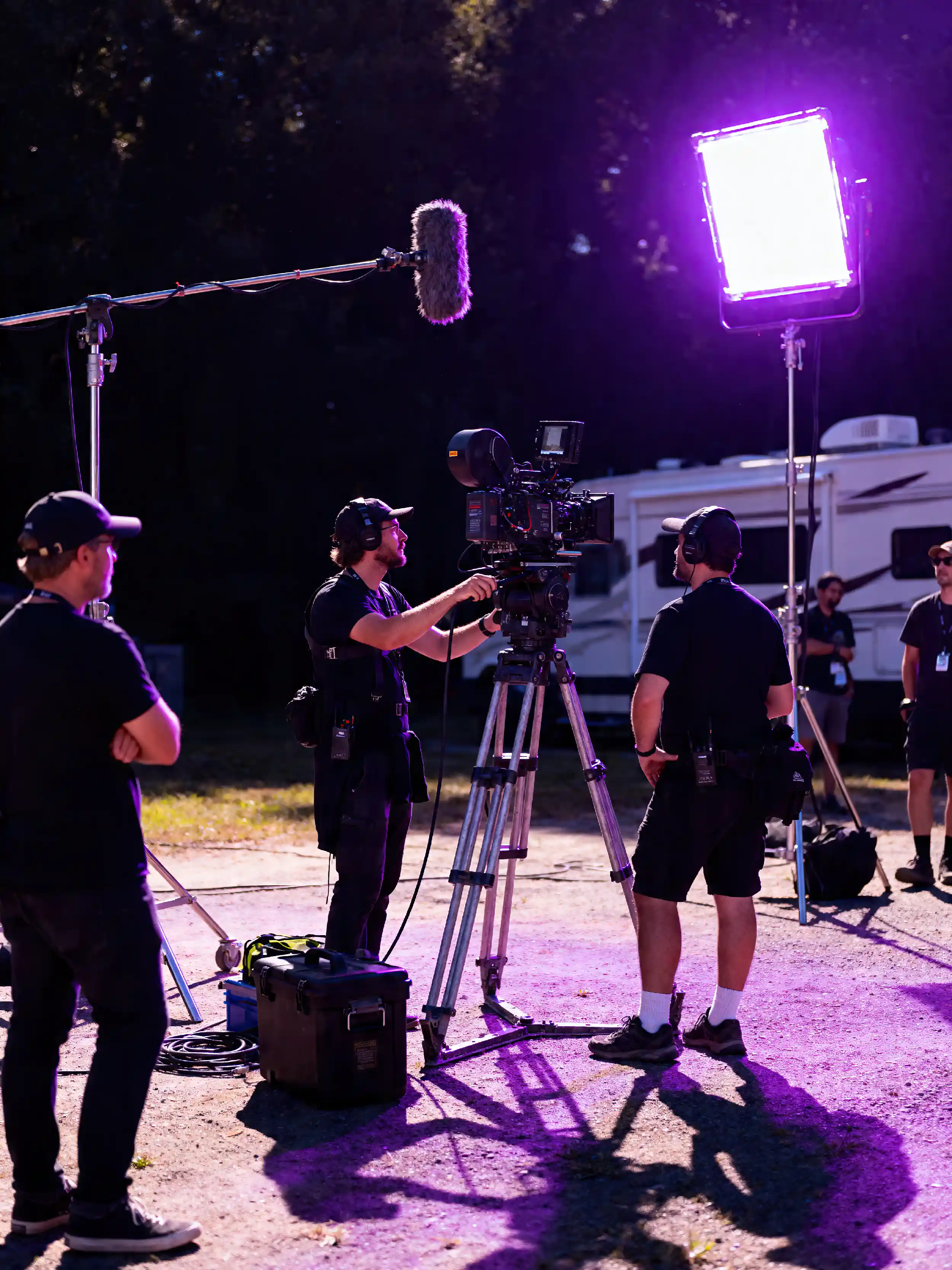
Event production is often defined by its visible outcomes. Stages, lighting, environments, and experiences that come together in a single moment. Yet behind every successful event lies a system designed to manage complexity across multiple layers.
Permits, logistics, technical requirements, timelines, and coordination between teams all exist simultaneously. Each layer carries its own challenges, but the real challenge is not managing them individually. It is aligning them into a structure that allows everything to function together.
As projects grow in scale, complexity increases. More stakeholders, more dependencies, and more variables create a system that cannot rely on improvisation. Without structure, even strong ideas lose clarity. With structure, complexity becomes manageable and predictable.
This is where production shifts from execution to system design. Every process, from planning to on-site operations, must be defined, connected, and controlled. When this happens, the event moves from being reactive to being intentional.
At Belt, we approach production as a structured system where every layer is aligned from the beginning. From permit acquisition and planning to vendor coordination and on-site operations, each step is developed with clarity and purpose.
Our work includes managing approvals with local authorities, coordinating teams and suppliers, and structuring daily operations to ensure continuity throughout the event. Each process is designed to reduce uncertainty and maintain control, even in complex environments.
Because structuring complexity is not about simplifying the event. It is about creating a system where every part knows its role, every transition is planned, and the entire production performs as one.


Large-scale events are defined by how people move through them. Every transition, from arrival to departure, shapes the overall experience.